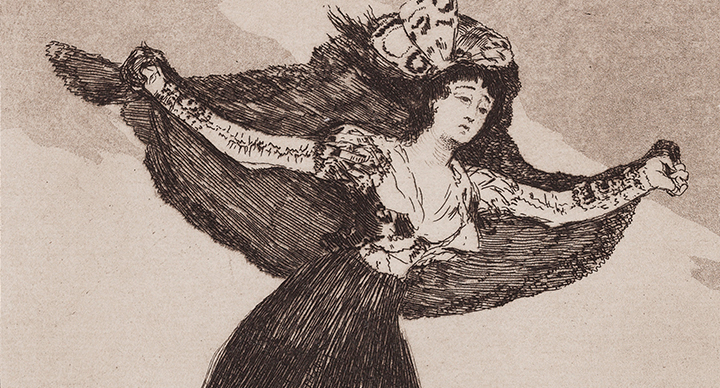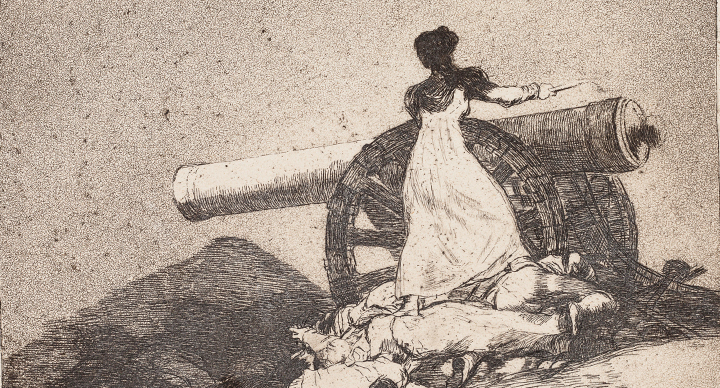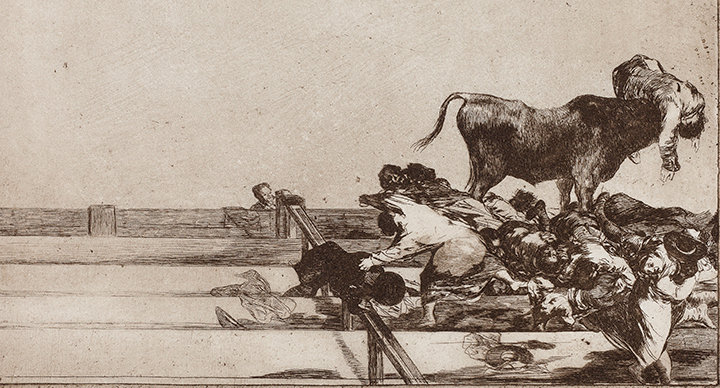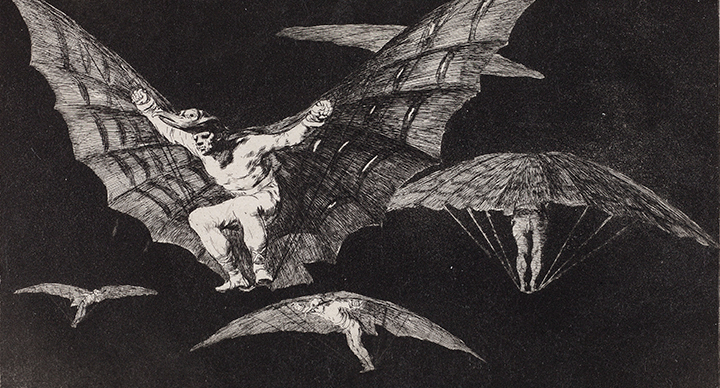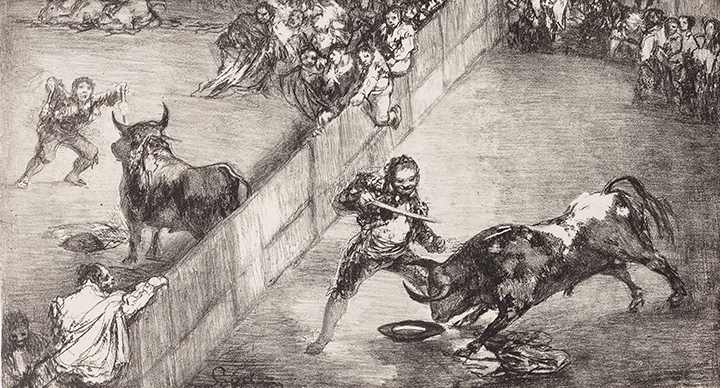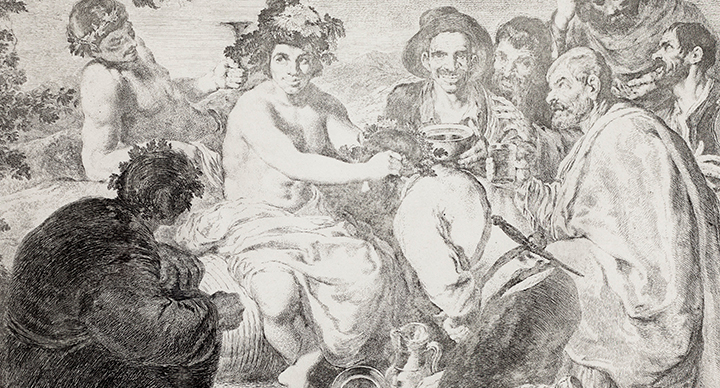

Francisco de Goya holds a central place in the history of printmaking. Throughout his career, he found in printmaking a medium of free, experimental, and deeply personal expression. Unlike commissioned painting, printmaking allowed him to explore ideas, criticisms, and visions that went beyond the limits of official representation. He mastered techniques such as etching, aquatint, drypoint, and burin, combining them with unprecedented boldness to expand the expressive possibilities of the printed image.
His major series — Caprichos (1799), The Disasters of War (1810-1814), Tauromaquia (1816) y Disparates (1815-1819)— form an exceptional body of work in which art and thought merge. In them, Goya reflects on the society of his time, violence, superstition, reason, and the human condition. More than illustrations, his prints are visual statements that anticipate modernity. In this gallery, visitors can discover an innovative and critical Goya, for whom printmaking was a territory of creative freedom.