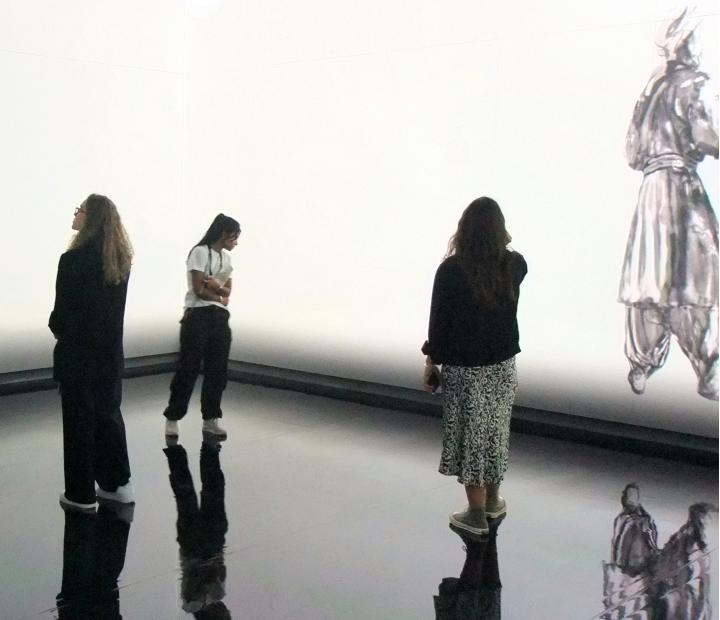
Immersive space
Goya, the great observer
An attentive, profound and perceptive observer; lucid, astonished, pessimistic, empathetic… Goya’s disposition and body of work are imbued with the spirit of the Enlightenment. He was not an isolated genius in the midst of a cultural void; in Goya’s art there are ideas shared by the literature and philosophy of his time, to which the artist contributed his personal observations, many of which transcend the context of his era to become universal. Added to this are the vicissitudes of his own life—illness, deafness—which gradually transformed the way he looked at and perceived the world.
The aim of this immersive experience is to look as Goya did and see what he saw, and to showcase his role both as an interpreter of the social, political and cultural realities he witnessed and, in a deeper, more philosophical sense, of the human condition.
Thus, four aspects were highlighted through which Goya directed his gaze:
- The human condition
- The psychology of the figures he portrayed
- Society and its customs
- The turbulent events he witnessed
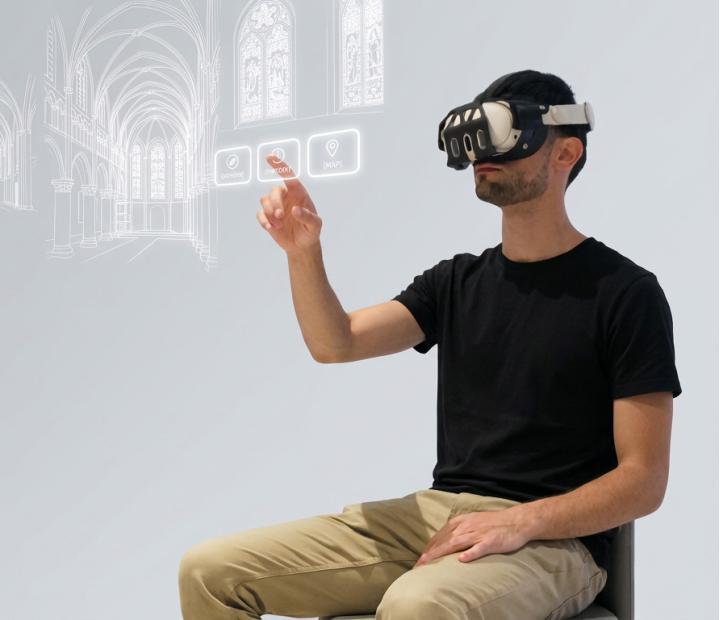
Goya at Great Heights
Immerse yourself in a virtual reality experience that allows you to discover, as never before, the works Francisco de Goya created for the domes of different spaces. Come closer to his paintings, explore their details and contemplate the monumental scale of his compositions from a new perspective.
Technology allows you to place yourself at the heart of these spaces and observe scenes, figures and brushstrokes up close—details that, at such great heights, are difficult to appreciate. An immersive journey that brings together art, history and technology to discover Goya’s genius and experience his works from a unique perspective.
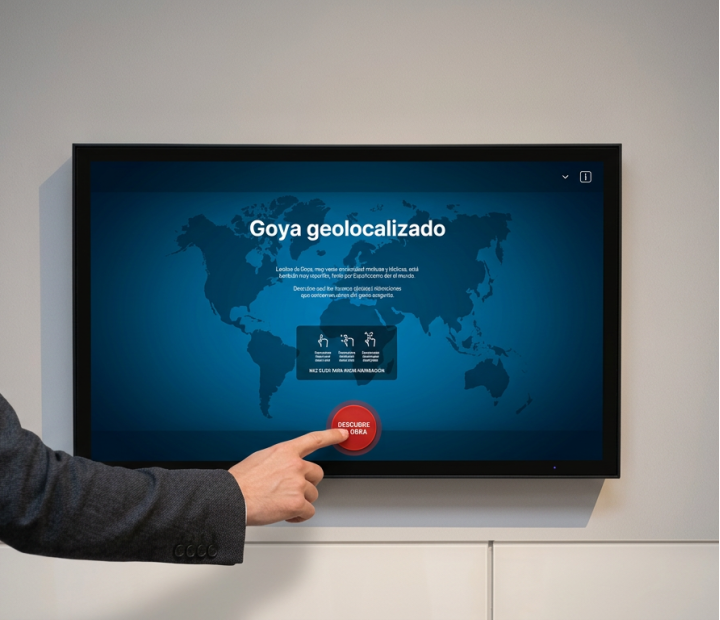
Goya Geolocated
Through this exhibition, visitors will come to appreciate the sheer volume of Goya’s output – the result of his passion for his work, his long life, and the fact that he continued to draw and paint right up until the end of his days. Over more than half a century, he produced around seven hundred paintings, two hundred and eighty prints and some one thousand drawings.
There is unanimous appreciation for Goya’s artistic stature, as evidenced by his presence in the collections of the most important national and international museums and institutions, as well as in private collections.
You will see that, owing to his status as court painter (to Kings Charles III, Charles IV and Ferdinand VII), there is a large concentration of his work in Madrid, in institutions such as the Prado Museum, the Royal Academy of Fine Arts of San Fernando – with which he was associated – and the National Library. But you will also see, for example, that the greatest concentration of Goya’s work as a fresco painter is found in Aragon, and specifically in Zaragoza.
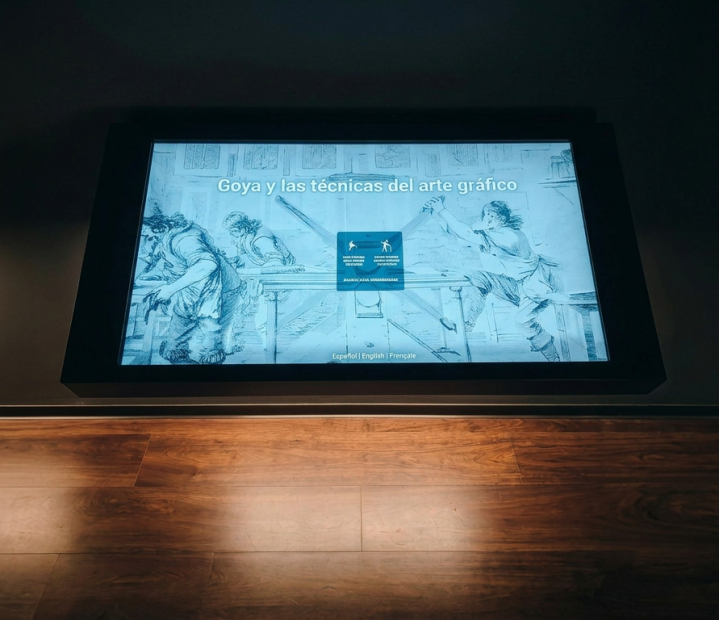
Engraving techniques
Goya’s first steps into the world of printmaking took place when the artist was already thirty years old and took the form of the series he produced based on Velázquez’s paintings, dating from 1778 to 1790.
Scholars of Goya’s work and his career as an engraver agree that he achieved technical mastery in 1792, at the age of 46, when he began work on the Caprichos series. At that time, engravers were not regarded as artists, but rather as craftsmen. Goya’s curiosity and his desire to develop as an artist may have been the reasons why he first turned to etching and later to another new technique, lithography.
He was over 70 years old when he learnt this latter printmaking technique, which he would go on to use in the series *The Bulls of Bordeaux*. Goya not only mastered these techniques, but combined them masterfully to develop his own distinctive style as an engraver, just as he had as a draughtsman and painter. His prints are examples of both the creative freedom of the Aragonese genius and his critical thinking.
The aim of this interactive resource is for visitors to learn about the intaglio and lithographic techniques Goya used to create his series of prints, and to see how his technical mastery made him one of the most important printmakers in history.
We shall find references to the state of printmaking in Goya’s time. In Europe, and in Spain (where it was still in its infancy, which is why Goya’s role as an engraver is so exceptional).
In addressing the techniques, the aim has been to describe them in brief texts and to supplement these with videos recorded specifically for this interactive feature in chalcography and lithography workshops based in Zaragoza.
Goya in high resolution
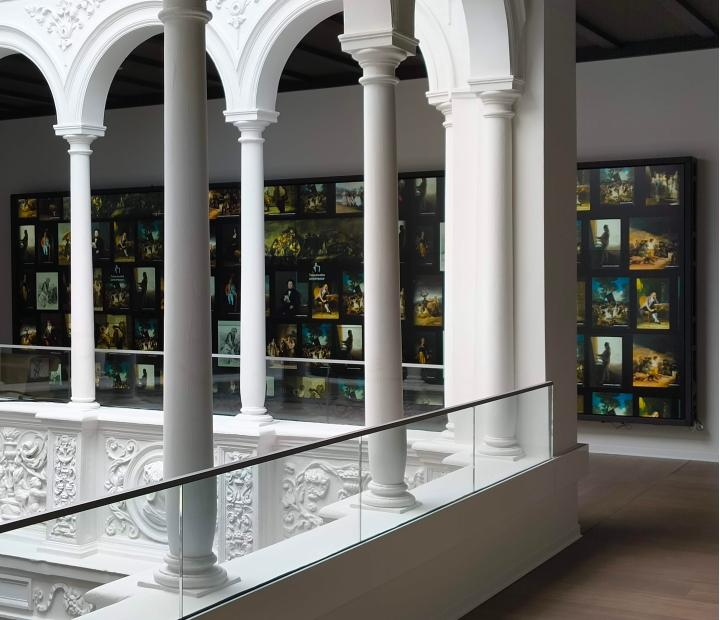
This interactive exhibition has the dual aim of bringing works by Goya that are not part of the museum’s collections – or even from Zaragoza – into the museum, as well as offering an insight into the various facets of the painter’s artistic world, so that we may understand and appreciate his formidable artistic stature and marvel at the expressive paths he explored.
The ability to zoom in on the images to unprecedented levels allows us to engage with them in a different, convenient and intuitive way. Nothing can replace the direct contemplation of the works, but it is no less true that their digital reproduction in high and super-high resolution reveals details that the human eye is unable to perceive within the visible spectrum, and places the viewer in a position closer to the materiality of the work, the pictorial technique and the artists’ working methods. Concepts such as light and shadow, line and colour, the brushstroke, figure and ground, transparencies, glazes and impasto are revealed, making the painting easier to understand. The qualities and textures, the capture of atmospheres, the glints and reflections, and the depiction of skin tones, fabrics and skies also reveal the secrets of the studio – the ‘behind-the-scenes’ of painting. These images also provide insight into the changes made by the painter during the creative process (retouching), which sometimes come to the surface and are visible.
Visitors will find a large interactive display featuring a selection of high-resolution digitised works, through which these revealing details will be showcased.
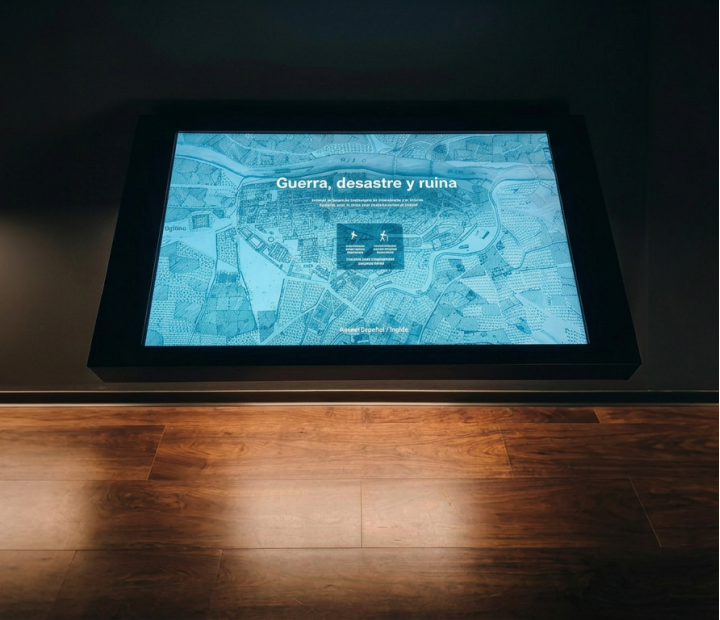
War, disaster and ruin
Armed conflicts have run through the entire history of humankind, and art has depicted them since ancient times to glorify the victors’ triumphs and their prominent place in the course of history. The media used have been innumerable: reliefs, commemorative columns and arches, tapestries, canvases, prints, and so on. So too have been the iconographic motifs employed to fulfil intentions which, beyond mere chronicle and glorification, have been critical statements, denunciations of the devastation, tragedy and death that are inherent in wars.
The Aragonese painter and engraver Francisco de Goya produced the series of prints *The Disasters of War* at the request of General José Rebolledo de Palafox, the architect of Zaragoza’s military defence against the invasion by Napoleon’s troops in 1808. And he did not merely commission Goya; he also commissioned Fernando Brambila, a painter of Italian origin based in Spain who worked for the Crown, and Juan Gálvez, who went on to become court painter to Ferdinand VII and headed the Royal Academy of Fine Arts of San Fernando.
Bearing in mind that the Sieges of Zaragoza were a pivotal episode in the War of Independence – and that this war, in turn, marked a turning point in the use of printmaking in Spain as a means of communication, and not merely as a form of artistic expression – this exhibition compares these two series of prints and examines how they were interpreted through different sensibilities and perspectives.
In addition, there is an epilogue, entitled ‘Other Disasters’, which visually illustrates the enormous influence that Goya’s ‘Disasters’ had on contemporary printmakers and lithographers. This establishes a link with Level 3, and specifically with the audiovisual presentation ‘As if he had painted the future: Goya and contemporary art’.
As if he had painted the future: Goya and contemporary art.
Goya is the central figure of the museum that bears his name, but he also serves as the link between Spanish and European artistic tradition and modern and contemporary visual arts, all of which are represented in the Ibercaja Foundation’s collections. If there is one aspect of the Aragonese master on which scholars of his work agree, it is his role as a herald or ‘forerunner’ of the developments in artistic movements and languages of the 19th and 20th centuries, whilst continuing to be a source of interest and inspiration for many artists today.
The final part of the museum tour takes place in the galleries where paintings and sculptures from the post-Goya period are exhibited; here, visitors can view works that emulate the Aragonese master in terms of themes and techniques, as well as others in which his influence is manifested in a less literal and more creative way.
The key aspects of this audiovisual production are to enable the audience to appreciate the extent to which Goya’s work is embedded in our present day and how it has lost none of its relevance.
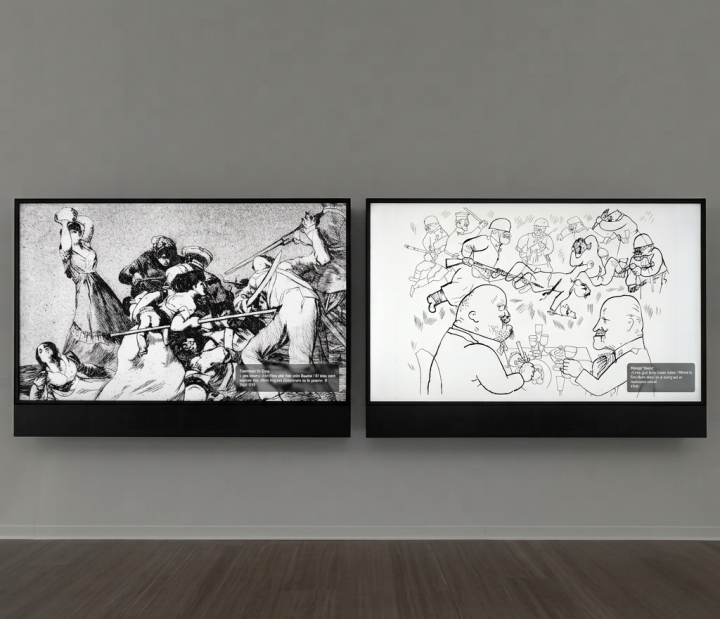
Furthermore, this is achieved through a side-by-side comparison of works by Goya and those by later artists, which can be viewed simultaneously in diptych mode.
These are images that speak for themselves. After this brief overview of the main artistic movements and styles that have been influenced by Goya’s mode of expression, the production concludes with another message: it is his way of observing, processing and reflecting reality, his independent and subjective spirit, and the expressive power of his works that ensure he remains permanently at the forefront.
The title of this audiovisual piece is intended as a tribute to John Berger (1926–2017), a British painter, writer and art critic internationally renowned for his reflections on how we view and interpret works of art. For Berger, Francisco de Goya was an artist with an extraordinary ability to communicate with us; it is as if he had understood the problems of the present, ‘as if he had painted the future.’ And therein lies his modernity.