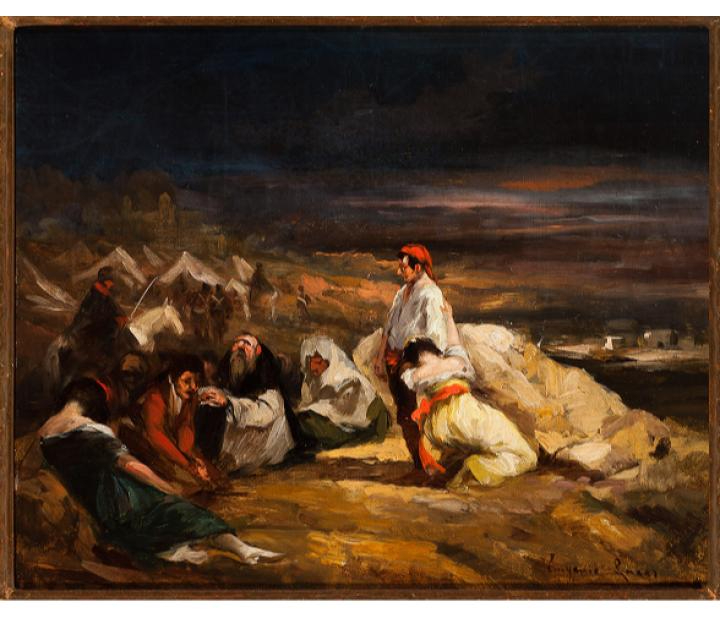
Francisco de Goya’s artistic legacy constitutes one of the cornerstones of Western art and marks the transition from classical tradition to modern sensibility. His work reflects not only the evolution of a style, but also a profound transformation in the way the role of the artist and the function of art in society are understood.
Goya pushed the boundaries of traditional genres. As a court painter, he revitalised portraiture, imbuing it with an unprecedented psychological insight that had a decisive influence on subsequent painting. As a designer of tapestry cartoons, he elevated scenes of everyday life, endowing them with artistic and narrative value. However, it was in printmaking that his legacy proved most revolutionary: series such as *Los Caprichos* (1799), *Los Desastres de la guerra* (1810–1815) and *Los Disparates* (1815–1824) paved the way for a critical, subjective art form free from official commissions.
In his final period, particularly with the Black Paintings, Goya broke radically with the aesthetic codes of his time. These works, characterised by darkness, violence and introspection, foreshadowed later artistic movements such as Romanticism, Expressionism and even Surrealism. Pictorial substance, gesture and emotional atmosphere came to take precedence over ideal beauty or formal correctness.
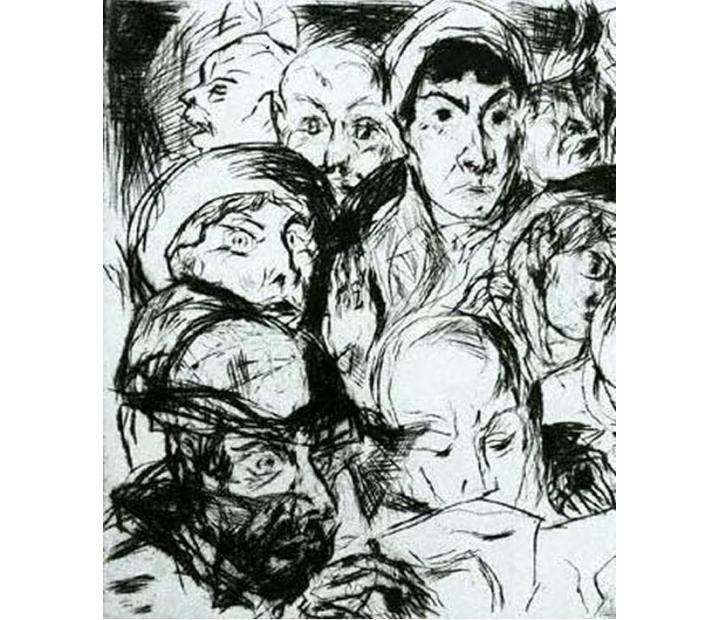
Goya’s legacy also lies in his artistic approach. He was an independent artist, capable of adapting to official commissions without compromising his personal and critical vision. His work demonstrates that art can serve as a historical record, a social critique and an exploration of the inner world all at once. This approach profoundly influenced artists such as Delacroix, Manet, Picasso and Bacon, who saw in Goya a forerunner of modern freedom.
Thus, Francisco de Goya’s artistic legacy transcends his era and context. He left behind not only memorable images, but also a new way of looking at reality and of understanding the artist as an active conscience of his time. For this reason, Goya remains an essential reference point for understanding the development of contemporary art and its capacity to engage the viewer.