16th Century
A House Museum
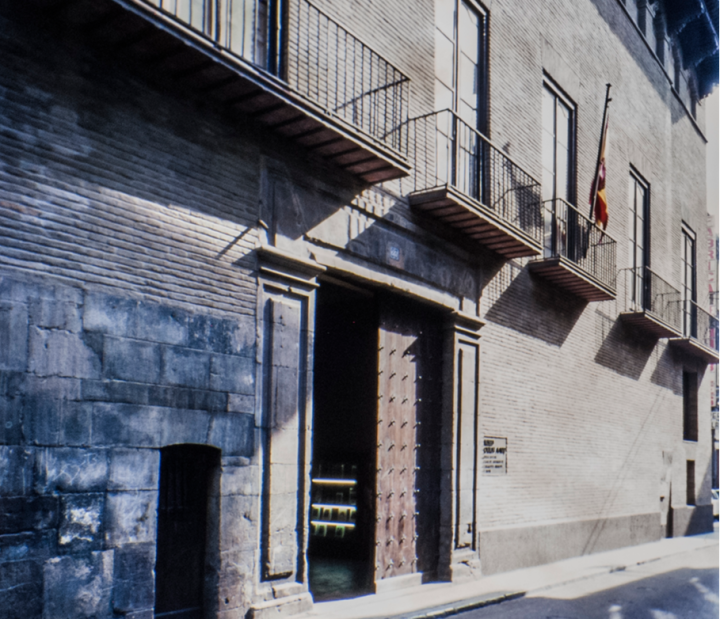
The building that now houses this museum originally belonged to the nobleman Jerónimo Cósida and his wife, Violante de Albión, both members of prominent families from Zaragoza.
Built in 1535 using stone and brick, it follows the model of an Aragonese Renaissance palace, with three floors arranged around a central courtyard. The ground floor served as an entrance hall and housed spaces such as the stables and the wine cellar; the main floor contained the family’s private quarters; and the upper floor accommodated the servants’ rooms and the granary.
The structure of the house is clearly reflected in the main facade, characterized by its sobriety and crowned by a gallery and an ornamental eave.
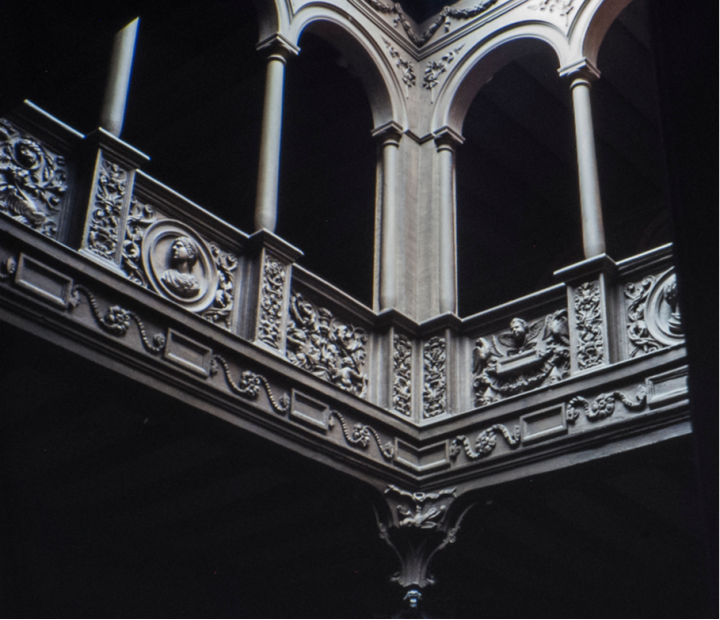
The courtyard contains the building’s most important decorative elements: ringed columns with fluted shafts and Corinthian-style capitals on the ground floor, along with medallions and grotesque motifs decorating the balustrades of the upper gallery.
1979 - 1980
Origins of the Museum
The origins of the Goya Museum Ibercaja Foundation - Camón Aznar Museum are closely linked to José Camón Aznar (1898–1979), an Aragonese intellectual, art historian, and one of the foremost experts on the work of Francisco de Goya. Together with his wife, María Luisa Álvarez Pinillos, Camón Aznar assembled throughout his life an important art collection that included Spanish painting from the 17th to the 19th centuries, decorative arts, furniture, graphic works, and a highly valuable specialized library.
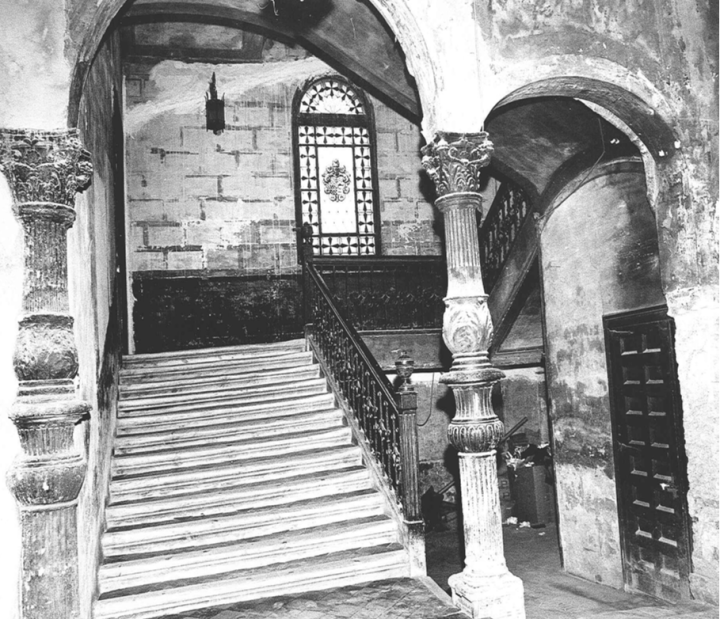
The couple conceived their collection not merely as a private assemblage, but as a cultural legacy intended to endure and engage in dialogue with the city. With this purpose in mind, in 1979, shortly after the death of Camón Aznar, the Camón Aznar Museum and Institute of Humanities opened its doors in the building known as the House of the Pardo Family, a historic 16th-century residence that preserved the collector’s domestic atmosphere and became a cultural landmark in Zaragoza.
The restoration of the building was carried out by Regino Borobio, a project that earned him the corresponding award from the Europa Nostra International Association. The Camón Aznar Museum also received official recognition from the Royal Academy of Fine Arts of San Fernando through the award of its Medal of Honour.
1980 - 2007
Early Years
During its first decades, the museum preserved the original spirit of its founders: an intimate, almost domestic space where works from different periods and styles coexisted, with a special focus on Goya’s artistic production.
The collection included complete series of prints such as Los Caprichos (1799), The Disasters of War (1810–1815), Bullfighting (1816), The Follies (1815–1824), and The Bulls of Bordeaux (1825), as well as paintings and pieces related to the artistic context of the Aragonese master.
This Goya-focused collection, together with Camón Aznar’s academic prestige, made the museum a landmark destination for researchers, students, and art enthusiasts.
Throughout these years, the museum established itself as a major cultural centre, projecting the humanist vocation of the Ibercaja Foundation collection throughout the city.
With a stable programme of exhibitions and activities, the museum helped bring art closer to an increasingly broad and diverse audience. Its work during these years provided a decisive boost to the dissemination of cultural heritage, fostered dialogue with researchers and specialists, and contributed to the development of new audiences sensitive to art and culture.
2008 - 2015
Transformation and Renewal
Over time, the institution embarked on a process of transformation to adapt to new museological approaches and the needs of an increasingly diverse audience.
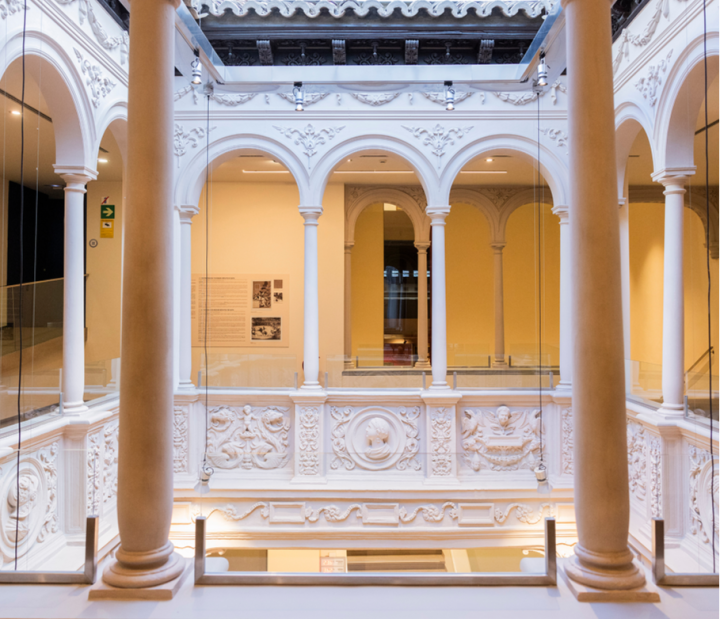
In 2008, a major renovation was undertaken, affecting both the museum’s spaces and its exhibition narrative. The objective was twofold: to preserve the essence of the Camón Aznar legacy while at the same time projecting the museum toward a broader vision, centered on the figure of Goya as its unifying axis.
This process culminated in 2015 with the reopening of the institution under the name Goya Museum. Ibercaja Collection – Camón Aznar Museum, a designation that acknowledges both the collector’s heritage and the museum’s ambition to become a leading centre for the study and dissemination of Goya’s work.
The renovation involved a complete reorganization of the permanent collection, which was restructured around the artist’s life, work, and influence on the history of art. The museum incorporated new works, expanded its historical narrative, and strengthened its role as an institution open to research, education, and public outreach.
The Museum Today
The Goya Museum. Ibercaja Foundation. Camón Aznar Museum is currently undergoing a major transformation aimed at becoming a 21st-century museum that is more accessible, dynamic, and closely connected to both the city and the work of Francisco de Goya.
The architectural firm Sebastián Arquitectos, led by architect Sergio Sebastián Franco, was selected as the winner of the anonymous competition organized by the Ibercaja Foundation to carry out the museum’s expansion and renovation.
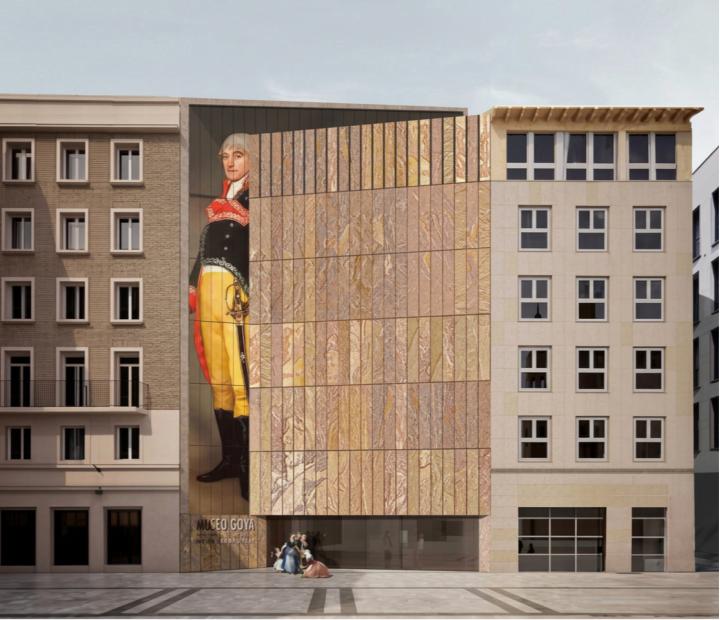
The project proposes opening the museum towards the iconic Plaza del Pilar through a new public entrance on Santiago Street, creating a more direct connection between the exhibition spaces and one of Zaragoza’s most important urban landmarks.
The intervention seeks to establish a dialogue between tradition and modernity. On the one hand, it preserves elements of the original 16th-century building and its historic urban setting; on the other, it incorporates contemporary technologies such as a large interactive screen on the façade and innovative materials that evoke Goya’s graphic work.
The new facade, composed of stone blocks up to three metres high, will reproduce fragments of different Goya prints digitised from the original plates, transforming the museum’s exterior into an artistic landmark visible from Zaragoza’s historic quarter.
The new design includes fully accessible routes through ramps, lifts, and staircases, ensuring that all visitors can enjoy the museum. In addition, new immersive and digital experiences will complement the traditional display of artworks, offering interactive content designed to deepen understanding of Goya’s life, work, and legacy.